
The Comprehensive Guide to Creative Video
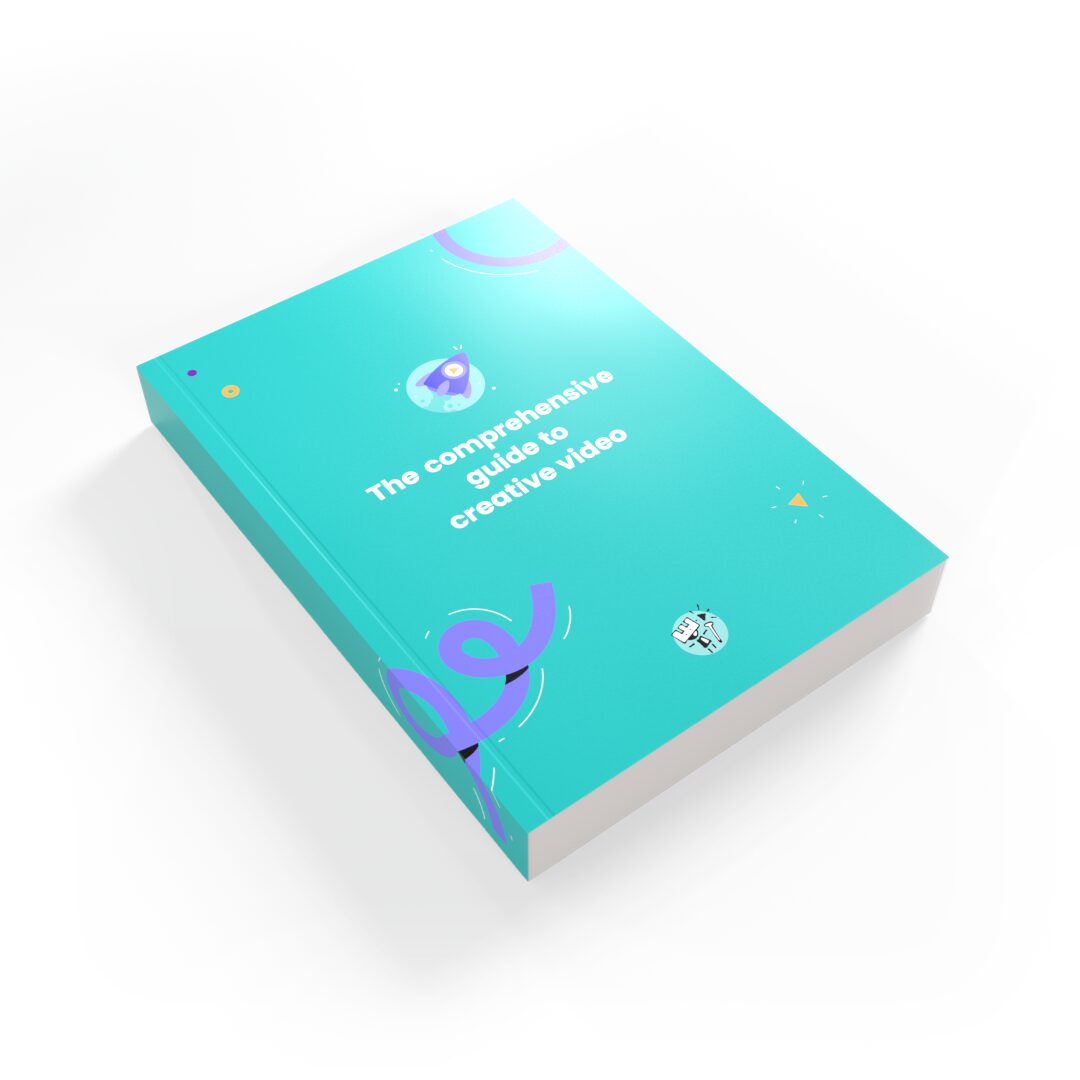
How a film is costed and produced, what to send us, what you get back, and a jargon-buster so you never have to nod along.
Get the e-book
We email the file to you.
Sent, check your inbox.
If nothing arrives in a few minutes, look in spam, or email hello@ministryofmotion.tv.
Everything we tell a client in the first meeting, written down. If you have never commissioned an animated film before, this is the whole process in one sitting. If you have, skip to the jargon-buster at the end and keep it for the next kick-off call.
What is in the e-book
The e-book that goes with this guide covers six things.
Jargon buster. Sometimes it can be overwhelming trying to decipher jargon, especially if design isn’t usually in your wheelhouse. The jargon buster gives you your very own cheat sheet for all terms design.
Costs and budgeting. Maybe you have a budget in mind for your project, or perhaps you know exactly what you want no matter the cost. Either way, it’s important to understand the parts of the animation process that are likely to affect your wallet, so that you can accurately start planning your next project.
Animation techniques. Different animation techniques have different qualities, and it’s helpful to look at which of these would be best suited to deliver the message you’re trying to send. What problem is your video project trying to solve, and how can the technique you choose help you to solve that problem?
Character animation styles. The style of the character animation that you choose will impact the complexity and cost of your project. See the range of styles that we provide, plus some guidance on how these characters may look as part of a final project.
Production process. From working with you to develop a creative brief to delivering your final product to the world, and every step in between, we’ve got your back. A breakdown of this process, plus our free video brief template to help you get started.
Video outputs. Your outputs should be in the most accessible formats for wherever you might wish to display your video. A suggested list of common output formats, so your video fits right into wherever it needs to be.
What a film costs, and why
Animation is priced in days, not in minutes of screen time. A ninety-second film with one voice and simple shapes might be a fortnight’s work. A ninety-second film with four characters, lip sync and a bespoke illustration style might be two months. The length tells us very little; the number of things on screen that have to be designed, drawn and moved tells us almost everything.
When we quote, we break the job into stages and put a number of days against each one. You see that breakdown. If the total is more than the budget, we talk about which stages to simplify: fewer scenes, a stock voice instead of a cast one, a text-led style instead of characters. The budget shapes the film, and it is far better to shape it at the start than to discover halfway through that the scope has quietly doubled.
Two things move the price more than anything else: the number of revision rounds built in, and how settled the script is when we begin. A script that changes after the storyboard is approved means redrawing the storyboard. A script that changes after animation has started means re-animating. We build in review points so that changes are cheap when they happen early and expensive only when they come late.
The stages
Brief and conversation. We ask what the film is for, who will watch it, where it will live and what you want them to do afterwards. We also ask what you have already: brand guidelines, a script, a voice you like, films you admire. Our guide on briefing a studio covers this in more detail.
Script. Either you supply one and we tighten it for the screen, or we write it from the brief. A script for animation is short: around 150 words a minute of spoken voice is comfortable. We read it aloud with a stopwatch before anyone draws a frame.
Style frames. Two or three finished stills that show what the film will look like: colour, typography, the illustration approach, how the characters look if there are any. This is the cheapest place to change your mind, and the most important sign-off in the whole project.
Storyboard. Every scene drawn as a still, with the script underneath. You can read it like a comic and see the whole film before it exists.
Voice and animatic. The voice is recorded, and we cut the storyboard to it so you can watch the film at its real pace with the real voice. Timing problems show up here, not at the end.
Animation. The long quiet part. We send work in progress at sensible points rather than daily, because half-finished animation looks worse than it is.
Sound, music and finish. Sound design, a music bed, subtitles, the end slate, and the versions you need for each channel. Then delivery, with all the working files kept here so the film can be updated in years to come.
What to send us
Brand guidelines, logos as vector files, fonts, any existing films, and the names of the people who will sign off. If a script exists, send it however rough it is. If you have a deadline that cannot move, say so in the first email and we will work backwards from it.
What you get back
The finished film in the formats you asked for, usually a master file plus versions for each platform, with and without subtitles. A short delivery note saying which version is which. And a promise that we have kept the project files, so updates later on are a small fixed-price job rather than a new production.
The jargon-buster
Animatic. The storyboard cut to the voice track, so you can watch the timing before animation starts.
Style frames. Finished stills that set the look of the film.
Storyboard. Every scene drawn as a still, in order, with the script.
Lower third. The name and title caption that sits in the bottom third of the screen.
End slate. The closing screen with your logo, website or call to action.
Lip sync. Matching a character’s mouth to the voice.
Rigging. Building a character so that it can be moved like a puppet rather than redrawn for every frame.
Keyframe. A point in time where something is set to be in a particular place. The animation happens between keyframes.
Easing. How movement speeds up and slows down. Linear movement looks mechanical; eased movement looks alive.
Motion graphics. Animation of type, shapes and graphics rather than characters.
Explainer. A short film, usually one to two minutes, that explains a product, service or idea.
Aspect ratio. The shape of the frame. 16:9 for landscape, 9:16 for vertical, 1:1 for square, 4:5 for feed posts.
Master. The highest quality version of the finished film, from which every other version is made.
Round. One set of amendments. Most of our quotes include two rounds at each stage.
Scratch voice. A placeholder voice recording, often read by one of us, used to time the animatic before the real voice is recorded.
Safe zone. The area of the frame that will not be covered by a platform’s own buttons and captions.
If you have read this far you know more than most people who commission animation. Bring the questions it raised and we will answer the rest in a call.